
To This You Were Called—Two2Grow, June 20
To This You Were Called—Two2Grow, June 20
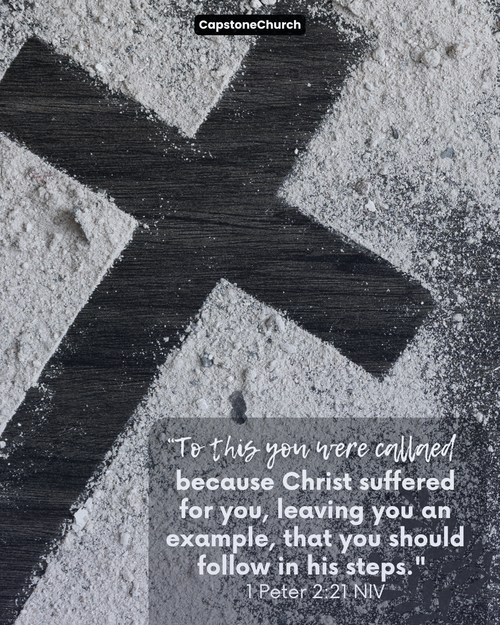
"To this you were called, because Christ suffered for you, leaving you an example, that you should follow in his steps." 1 Peter 2:21 NIV
When I was young, I thought that if I only had strong enough faith, I wouldn't have to go through difficulties. I saw suffering and faith as opposites that could not be mixed, like water and oil. But as I went deeper into God's Word, I realized I had misunderstood it all.
The Bible teaches that following Jesus and suffering actually go together.
Jesus didn't just suffer in our place; He also suffered as our example. That's what today's verse says: "To this you were called"—called to suffer, that is.
But why would God allow His children to go through suffering? So often, suffering feels completely meaningless.
There was a great revival in Germany during the nineteenth century whose influence is still felt around the world today. Pastor Johann Christoph Blumhardt emphasized prayer, deliverance, healing, and the coming Kingdom of God. Extraordinary miracles were reported. Thousands of people traveled to his town seeking prayer, healing, and spiritual renewal, and reports of healings spread far and wide.
Yet in one of his devotional writings, he said:
“We must pass through all the grief that other people have, because there is to be a man of faith in every sorrow of the world.”¹
The point is this: suffering becomes a place of ministry to God and to others.
In the midst of suffering, we can serve as priests before God, offering a sacrifice of praise in the middle of hardship and pain.
As we participate in the suffering of the world, we can be salt and light, pointing people to the reality of Jesus.
So take courage today. Fix your eyes on Jesus, do not be ashamed of your suffering, and let it become a platform for praising God and proclaiming the gospel.
Holy Spirit, give me the strength to suffer for Jesus. Help me offer a sacrifice of praise and faithfully represent Jesus to those around me.
Pastor Mikael Stenhammar, PhD
¹ Johann Christoph Blumhardt, Thy Kingdom Come: A Blumhardt Reader, ed. Vernard Eller (Grand Rapids: Eerdmans, 1980), 170.
When I was young, I thought that if I only had strong enough faith, I wouldn't have to go through difficulties. I saw suffering and faith as opposites that could not be mixed, like water and oil. But as I went deeper into God's Word, I realized I had misunderstood it all.
The Bible teaches that following Jesus and suffering actually go together.
Jesus didn't just suffer in our place; He also suffered as our example. That's what today's verse says: "To this you were called"—called to suffer, that is.
But why would God allow His children to go through suffering? So often, suffering feels completely meaningless.
There was a great revival in Germany during the nineteenth century whose influence is still felt around the world today. Pastor Johann Christoph Blumhardt emphasized prayer, deliverance, healing, and the coming Kingdom of God. Extraordinary miracles were reported. Thousands of people traveled to his town seeking prayer, healing, and spiritual renewal, and reports of healings spread far and wide.
Yet in one of his devotional writings, he said:
“We must pass through all the grief that other people have, because there is to be a man of faith in every sorrow of the world.”¹
The point is this: suffering becomes a place of ministry to God and to others.
In the midst of suffering, we can serve as priests before God, offering a sacrifice of praise in the middle of hardship and pain.
As we participate in the suffering of the world, we can be salt and light, pointing people to the reality of Jesus.
So take courage today. Fix your eyes on Jesus, do not be ashamed of your suffering, and let it become a platform for praising God and proclaiming the gospel.
Holy Spirit, give me the strength to suffer for Jesus. Help me offer a sacrifice of praise and faithfully represent Jesus to those around me.
Pastor Mikael Stenhammar, PhD
¹ Johann Christoph Blumhardt, Thy Kingdom Come: A Blumhardt Reader, ed. Vernard Eller (Grand Rapids: Eerdmans, 1980), 170.